My trainer told me to hit 130 grams of protein a day, handed me a printout with chicken breast listed at the top of basically every meal suggestion, and I nodded along in the gym like that was a plan I could actually follow. It wasn’t. I’ve disliked chicken breast specifically, not chicken in general, since I was a kid, something about the dry, slightly stringy texture that no amount of marinade or brining has ever fully fixed for me. Dark meat is fine. Thighs are fine. Plain grilled chicken breast makes me chew for what feels like ten minutes per bite.
So I spent about four months building an actual protein rotation that had nothing to do with chicken breast, mostly through trial and error, a food scale, and a lot of googling gram counts at 9pm. Here’s what actually stuck.
Where My Protein Math Actually Starts
Before getting into specific foods, it helps to know the actual number I’m working with, since “high protein” means different things depending on your goals and body weight. Mine landed around 130 grams a day based on my trainer’s recommendation, which is roughly 1 gram per pound of a modified target weight, not my current weight. If you want a more general, less trainer-specific breakdown of how protein needs are actually calculated, Harvard Health has a solid explainer on daily protein requirements that walks through the reasoning better than I can here.
What matters for this post is less the exact number and more the fact that hitting a real protein target without a single reliable chicken breast meal in your rotation means you need more variety than most “high protein” content assumes, because a lot of that content leans on chicken breast as the default answer for almost every meal.
The Foods That Replaced Chicken Breast, One by One
Ground turkey, 93% lean. This was the first real swap that worked, mostly because the texture is completely different from a chicken breast, more like ground beef than poultry in mouthfeel. A pound has around 80 grams of protein, and it works in literally everything, tacos, a bolognese, stuffed peppers. I season it heavily since ground turkey on its own is fairly bland, usually with cumin, smoked paprika, and a good amount of garlic powder.
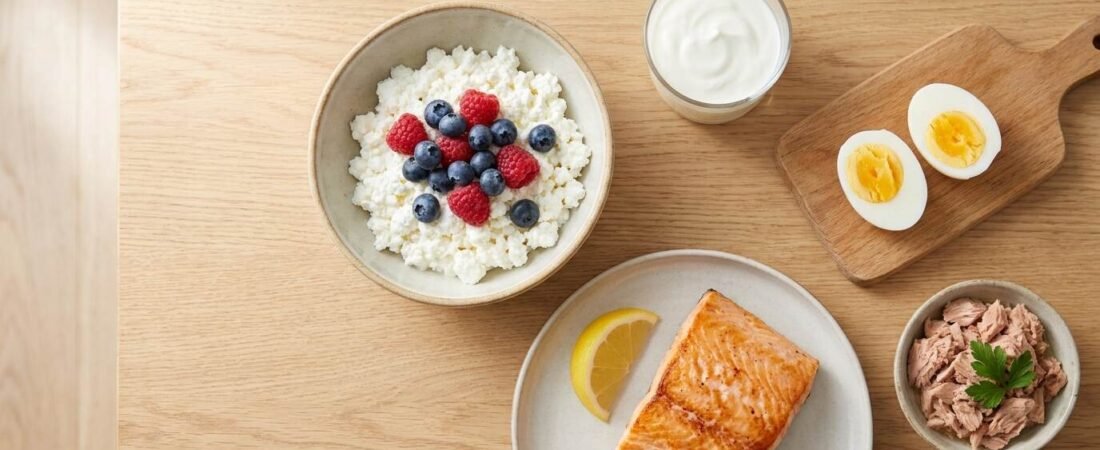
Cottage cheese, full fat, not the low fat version. I avoided cottage cheese for years assuming I’d hate the texture, and then a friend talked me into trying the Good Culture brand, and it turned out to be one of the easiest protein sources I’ve added. A cup has around 25 grams of protein. I eat it with everything sweet, honey and berries, or savory, black pepper and everything bagel seasoning on top.
Eggs, but specifically egg whites mixed with one or two whole eggs. Whole eggs alone weren’t getting me enough volume without also eating more fat and calories than I wanted, so I started buying a carton of liquid egg whites and mixing them with one or two whole eggs for texture and flavor. Three whole eggs plus a cup of egg whites gets you close to 45 grams of protein in one skillet.

Canned tuna, packed in water. I was skeptical about this one because I associate canned tuna with bad school lunches, but a single can has around 20 grams of protein for very few calories, and mixed with a spoonful of Greek yogurt instead of mayo, plus some diced celery and a squeeze of lemon, it’s actually become a lunch I look forward to rather than tolerate.
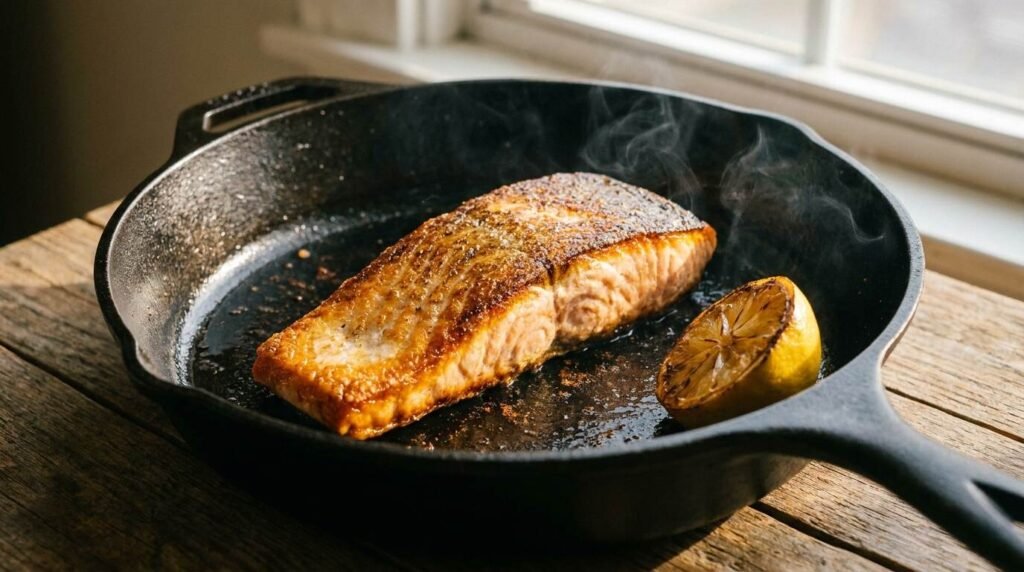
Salmon, specifically the frozen individually vacuum sealed fillets from Costco. Salmon has a completely different texture from chicken breast, flakier and richer, and it turns out that difference was exactly what I needed. A 6 ounce fillet runs about 34 grams of protein. I pan sear it with just salt, pepper, and a squeeze of lemon, and it takes maybe 8 minutes total.
Plain Greek yogurt, the full fat Fage brand specifically. Low fat Greek yogurt has a slightly chalky texture I don’t love, but the full fat version is genuinely creamy in a way that made it easy to eat daily. A single serving has around 17-20 grams of protein depending on the brand, and I use it in smoothies, as a base for dips, or just plain with a drizzle of honey.
Protein powder, whey isolate, mixed into oats rather than just water or milk. I resisted protein powder for a long time assuming it would taste artificial, but stirring a scoop into a bowl of warm oatmeal, rather than shaking it into a cold drink, made it feel like an actual food rather than a supplement. One scoop typically adds 24-25 grams of protein.
A Single Day That Actually Hit My Number
I think it’s more useful to see one real day than a hypothetical meal plan, so here’s an actual Tuesday from a few weeks ago, tracked through the MyFitnessPal app, which is what I use to log everything since guessing gram counts consistently was never something I trusted myself to do accurately.
Breakfast was three whole eggs scrambled with a cup of egg whites and a handful of spinach, around 45 grams of protein. A mid-morning snack was a cup of full fat cottage cheese with a sliced peach on top, adding 25 grams. Lunch was the tuna mixed with Greek yogurt over a bed of greens with some crackers on the side, about 24 grams once you factor in the yogurt itself. An afternoon snack was a protein shake, just whey isolate and water since I didn’t feel like making oatmeal that day, adding another 25 grams. Dinner was the pan seared salmon with roasted broccoli and rice, contributing 34 grams.
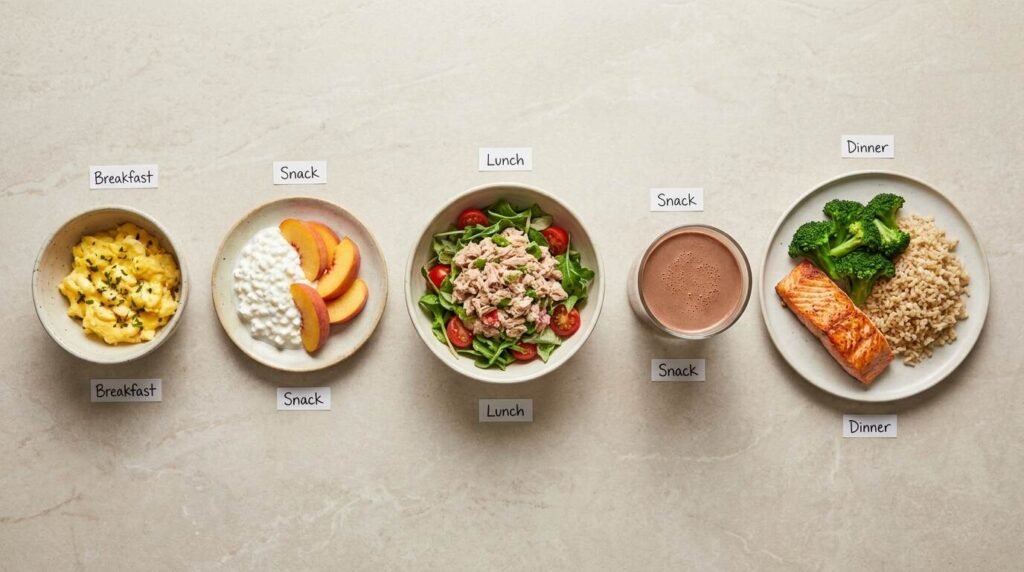
That adds up to right around 153 grams for the day, comfortably above my 130 gram target, without a single bite of chicken breast anywhere in the lineup.
The Swap That Genuinely Didn’t Work
I want to be honest about one attempt that failed, because most of these posts only show the wins. I tried replacing my usual chicken breast avoidance strategy with turkey breast slices instead, thinking it’d feel like a reasonable middle ground, poultry, lean, high protein, but still different enough from chicken breast that I might tolerate it.
It didn’t work. Turkey breast, at least the deli sliced version I bought, had almost the exact same dry, stringy texture issue that made me avoid chicken breast in the first place, just with a slightly different flavor. I ended up giving most of that package to my dog rather than eating it myself, which felt like a small defeat after being fairly confident going in. The lesson there was that my aversion is really about lean, plain poultry breast meat specifically as a category, not chicken as a species, which helped me stop wasting money testing other lean poultry cuts hoping for a different result.
Eggs and cottage cheese also happen to be two of the cheapest protein sources out there, which mattered more to me than I expected once I started paying attention to cost per gram. That overlap is actually part of why eggs showed up constantly during the stretch when I was feeding a family of four on $50 a week, long before protein targets were ever part of the conversation.
Where a Recipe You Might Already Know Fits In
If you’re building out a similar rotation and want something that uses eggs without it just being another breakfast scramble, the egg-heavy base in my usual 10-minute egg fried rice actually works well here too, since swapping in extra egg whites alongside the whole eggs bumps the protein per serving up noticeably without changing the dish much at all.
Still Not A Chicken Breast Person
It’s been about eight months since I built this rotation, and I haven’t gone back to forcing down plain chicken breast just because it’s the “efficient” protein choice everyone defaults to. My protein numbers have stayed consistent, my trainer stopped mentioning chicken breast specifically once she saw the numbers working out, and I’ve genuinely started looking forward to some of these meals instead of treating protein as a box to check.
If you’ve got a similar aversion, whether it’s chicken breast specifically or some other “obvious” high protein food everyone assumes you should just push through, it’s worth spending a few weeks testing real alternatives with actual gram counts rather than assuming you’re stuck eating something you don’t enjoy just because it’s the most commonly recommended option.