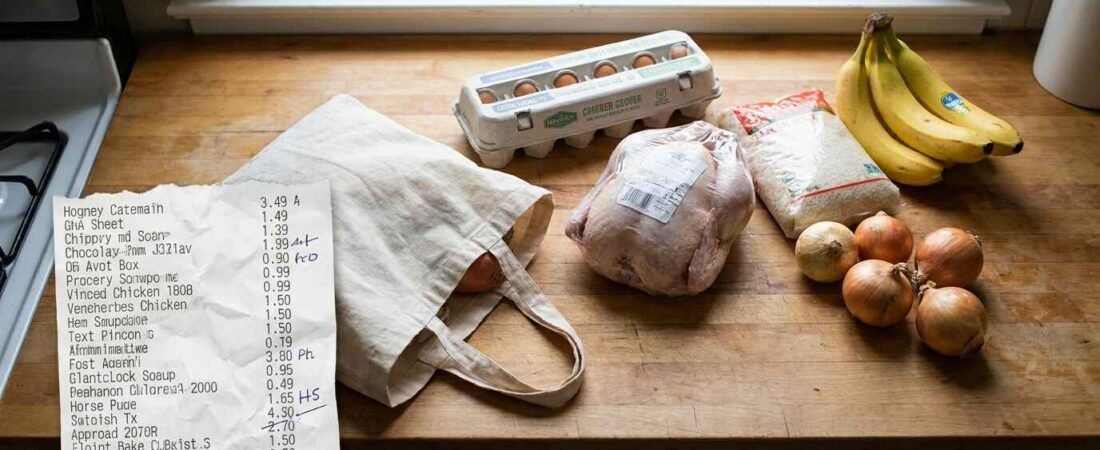
$50.13. That’s what showed up on the receipt the first week I actually tried to stick to a $50 grocery budget for four people, and I remember staring at that thirteen cents like it was a personal failure. I’d gone in convinced $50 was doable. I walked out having barely made it, with a cart full of stuff I wasn’t even sure would get us through seven full days.
That was almost a year ago. My husband had just taken a pay cut when his hours got reduced, and between that and a car repair we hadn’t budgeted for, groceries were the one category we could actually control. Everything else rent, utilities, gas was fixed. Food was the only flexible number, which meant it became the number I obsessed over for a solid three months.
I want to walk you through what an actual week looked like, not a hypothetical “here’s a sample plan” version, because the real thing had more compromises in it than I expected going in.
Why $50 Felt Impossible At First
My first attempt didn’t even involve a real plan. I just tried to spend less at the store I normally shopped at, and it didn’t work. I was still buying name-brand cereal, still grabbing pre-made sauces, still tossing in convenience items out of habit. And I came in around $95 that first week and felt genuinely defeated.
The shift happened when I stopped trying to spend less at my regular store and instead rebuilt the whole approach around where I was shopping and what I was planning before I ever walked in. Those two things mattered more than any individual product swap.
Where the Money Actually Went
I switched most of our shopping to Aldi, with occasional trips to Walmart for a couple of specific items Aldi doesn’t consistently carry, like a particular brand of tortillas my kids actually eat without complaint. Produce prices at Aldi were consistently lower than the two other grocery stores near us, sometimes by a significant margin a bag of apples that ran $4.50 elsewhere was closer to $2.80 there.
Here’s roughly how a typical $50 broke down:
- Proteins: about $16-18 — usually a combination of a whole chicken (around $5-6), a pound of ground turkey (around $3.50), and a dozen eggs (around $2)
- Produce: about $12-14 — bananas, apples, carrots, onions, whatever was cheapest that week between potatoes and a bag of frozen mixed vegetables
- Grains and pantry staples: about $10-12 — rice, pasta, a loaf of bread, oats, peanut butter (we don’t have any food allergies in our house, though I know from writing about it that plenty of families have to plan around that too)
- Dairy: about $6-8 — milk, a block of cheese, sometimes plain yogurt if the budget allowed that week
- Everything else: whatever was left, usually $2-4, which went toward something like a can of tomato sauce or a spice we were running low on
That math only worked because I stopped buying things impulsively and started building the week’s meals around what was actually on sale, not the other way around.
A Real Week, Meal by Meal
This is the part I think matters most, because “eat cheap” advice is useless without seeing what it actually looks like on a plate.
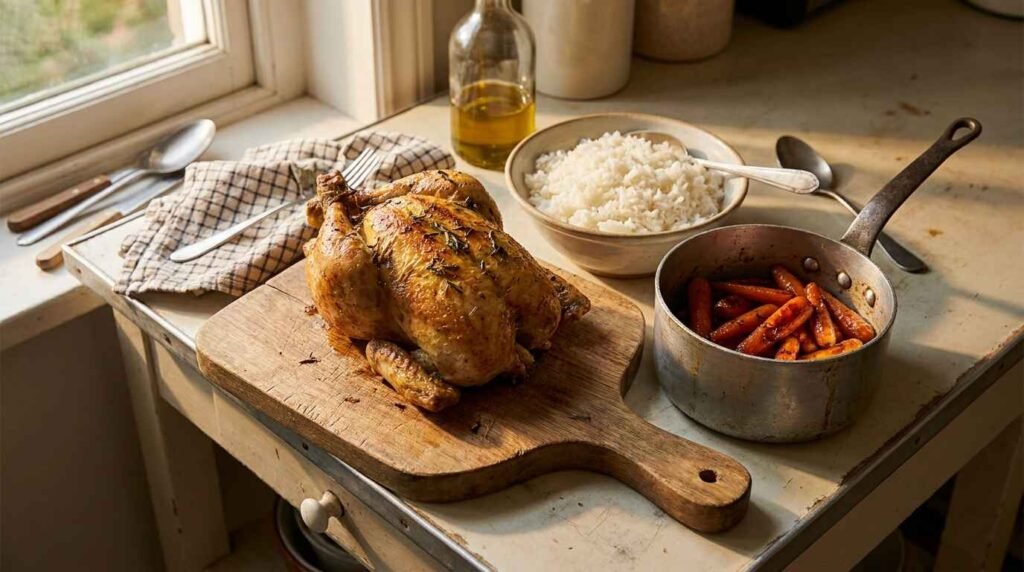
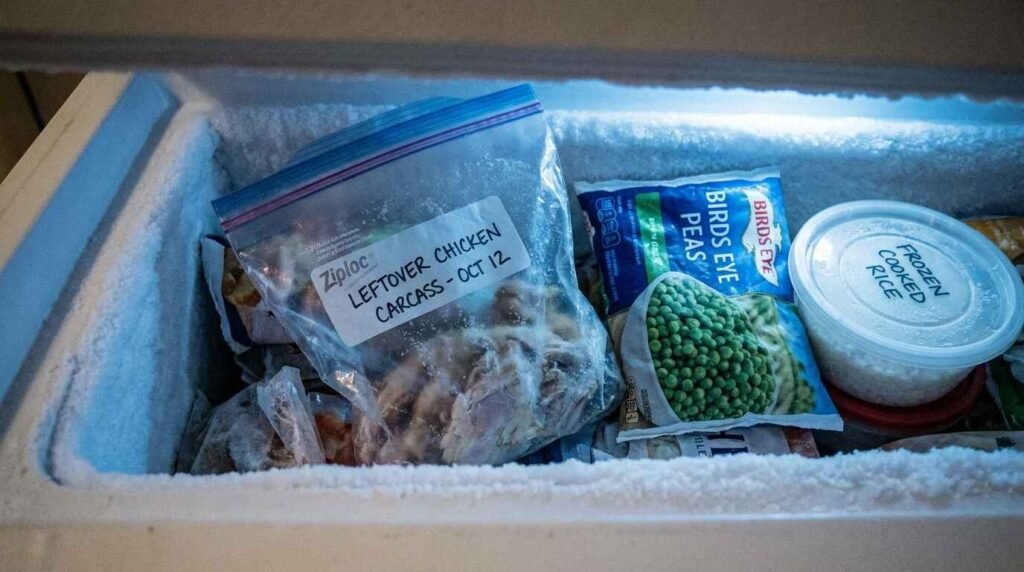
Sunday — grocery trip and prep day. I spent about $48.60 that particular week. Came home, roasted the whole chicken (about 75 minutes at 375°F), and immediately pulled the meat off the bones once it cooled, saving the carcass in a bag in the freezer for stock later.
Sunday night — roasted chicken, rice, and roasted carrots. This used maybe a third of the chicken, leaving the rest for later in the week.
Monday — chicken and rice soup, made using some of the leftover chicken, a couple of carrots, an onion, and rice, stretched with extra water and a bouillon cube to make it go further than it probably should have. Cost for the night, factoring in ingredients already used from Sunday, was maybe $2-3 in additional items.
Tuesday — ground turkey tacos, using the tortillas from Walmart, a pound of turkey seasoned with a taco seasoning packet, shredded cheese, and whatever lettuce was still good from Sunday’s produce haul.
Wednesday — pasta with a simple garlic and olive oil sauce, tossed with frozen peas for some color and nutrition, topped with parmesan. This was one of our cheapest nights, probably under $4 total for all four of us. If you want the more indulgent version of this kind of dish, it’s basically a stripped-down cousin of the 15-minute garlic butter pasta I make when the budget’s a little less tight.
Thursday — leftover turkey mixed into a simple fried rice, using the rice from earlier in the week, an egg, frozen mixed vegetables, and soy sauce. This was almost entirely using things already purchased, so the actual added cost was close to zero.
Friday — eggs, toast, and roasted potatoes for a breakfast-for-dinner night, which became a regular thing specifically because eggs and potatoes were two of the cheapest proteins and carbs we could buy, and my kids never once complained about “breakfast” showing up at 6 pm.
Saturday — the chicken stock I’d frozen on Sunday, turned into a simple vegetable soup with whatever produce was left, stretched with a can of diced tomatoes and some extra pasta thrown in at the end.
By Saturday night, we’d used almost everything we bought, with maybe a few eggs and a bit of rice left over to start the next week’s stretch.
The Week It Almost Didn’t Work
I want to be honest about the week this system nearly broke, because it wasn’t a smooth straight line to success.
About six weeks in, my daughter had a birthday coming up, and I genuinely didn’t know how to fit a cake and a few decorations into $50 without cutting something essential. I ended up making the actual mistake of skipping the protein budget that week to cover cake ingredients, which meant we ate a lot more pasta and eggs than usual and almost no meat for about five days straight.
It worked, technically nobody went hungry but by day four everyone was cranky and I felt like I’d failed at the one thing I was supposed to be managing. What I learned from that week is that the $50 budget needed a small buffer built in for exactly these situations, not a hard $50 ceiling with zero flexibility. Now I keep a rough $5-10 “irregular week” cushion by occasionally coming in under budget on quieter weeks, specifically so a birthday or a holiday doesn’t blow up the whole system.
Two Habits That Actually Made This Sustainable
Beyond the specific meals, two things mattered more than any single recipe or shopping trick.
The first was planning the entire week’s meals before I ever left for the store, using the sale flyer as the actual starting point instead of a wish list. I’d check the Aldi weekly ad, usually available through their app or just posted near the entrance, and build the meals around whatever protein was cheapest that particular week, rather than deciding on chicken every single time out of habit.
The second was accepting that some meals would be genuinely repetitive, and that was fine. Rice and eggs showed up multiple times a week, in different forms, because they were cheap and filling, not because I ran out of creativity. I stopped chasing variety for its own sake and focused on making sure everyone was actually full and the food tasted decent, which turned out to matter a lot more to my kids than whether dinner was “exciting.”
Where We Landed
We’re not on that tight a budget anymore, my husband’s hours came back, and $50 a week for four people isn’t our reality day to day now. But a surprising amount of that routine stuck around anyway. We still shop mostly at Aldi. I still plan the week around what’s on sale before I decide what we’re eating. The chicken carcass still goes in the freezer bag for stock, every single time.
What that stretch taught me wasn’t really about deprivation. It was that most of what we’d been spending before was habit, not necessity, and once I had a real reason to question every item going into the cart, a lot of it just wasn’t as needed as I’d assumed.