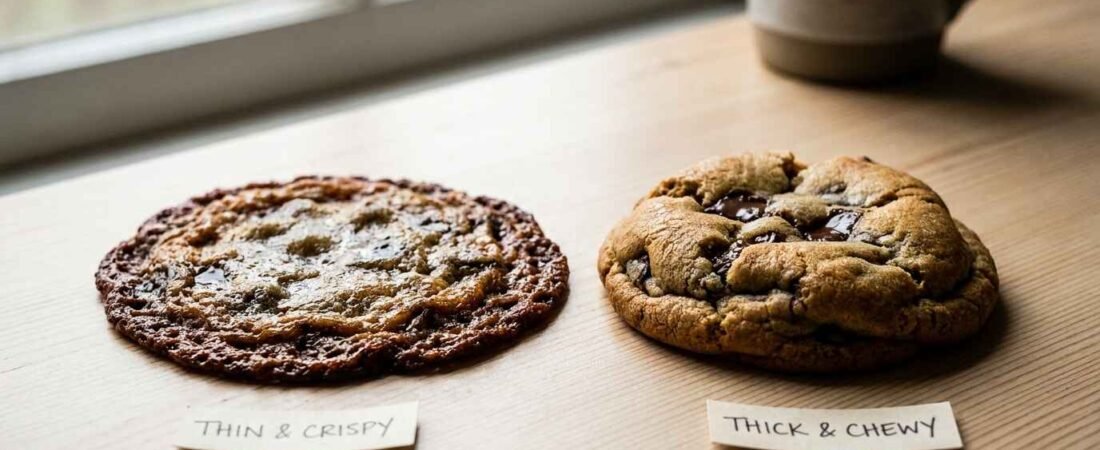
I pulled a tray of chocolate chip cookies out of the oven, and what stared back at me looked like cookie-shaped puddles. Thin, greasy, spread out so far that three of them had fused into one giant lace-edged blob taking up half the sheet pan. This happened four batches in a row before I finally figured out what was going on.
For months I genuinely thought I just wasn’t a “cookie person.” My banana bread turned out fine. My brownies were solid. But cookies? Every single batch came out flat, oily-looking, and crispy at the edges when I wanted thick and chewy. I was ready to accept defeat and just buy cookie dough from the store.
Turns out the whole problem was sitting on my counter the entire time, and it wasn’t the recipe at all.
The Symptom That Kept Showing Up
Before I get into what fixed it, let me describe exactly what was happening, because if you’re dealing with this too, you’ll probably recognize it immediately.
The cookies looked fine going into the oven, normal little dough balls, nicely spaced on the sheet. But within the first 6-7 minutes of baking, they’d flatten out fast, spreading way wider than they should, with a thin, almost see-through edge and a slightly greasy sheen on top. By the time they finished baking, they were crispy all the way through instead of having that soft, chewy center everyone actually wants.
They didn’t taste bad exactly. But they weren’t cookies. They were more like thin, buttery crackers with chocolate chips in them.
What I Tried First (That Didn’t Actually Fix It)
I went down the classic troubleshooting rabbit hole, the same one most people go down.
More flour. I added an extra 2-3 tablespoons to the next batch, thinking the dough was too wet. It helped a tiny bit — the cookies spread slightly less — but they also came out dense and a little cakey, which wasn’t what I wanted either. And they still had that greasy sheen on top.
Chilling the dough. I chilled a batch for 30 minutes before baking, which is advice you see everywhere. It helped marginally, buying me maybe an extra minute before they started spreading, but they still flattened out by the time they were done.
A colder baking sheet. I even tried running my baking sheet under cold water between batches so it wasn’t already warm from the oven. This is a real tip that does help in some situations, but for me, it barely moved the needle. The cookies still spread.
I was fixing symptoms without touching the actual cause, which is a really frustrating place to be when you’re standing in your kitchen at 8 pm wondering why a four-ingredient dessert is defeating you.
The Actual Problem: My Butter Was Too Warm
Here’s what I eventually figured out, mostly by accident. I made a batch on a genuinely cold day in my kitchen, and the butter I’d left out was still pretty firm when I creamed it with the sugar. That batch came out completely different — thick, slightly domed, chewy in the middle, with none of that greasy sheen.
That was the moment it clicked. My butter had been too warm every single time before that.
“Softened butter” is one of those instructions that sounds simple but is actually really vague, and I’d been getting it wrong for months. I was either microwaving butter for a few seconds to speed things up, or just leaving it out on a warm kitchen counter for a couple hours until it was basically half-melted. Both of those go way past “softened” into “too soft,” and that’s the actual cause of the spreading.
Here’s why it matters: when you cream butter and sugar together, you’re trapping tiny air pockets in the butter that help the cookie hold its shape and rise slightly as it bakes. If the butter is too warm or partially melted, it can’t hold those air pockets the same way, and instead of creaming properly, it just sort of blends into a greasy paste with the sugar. Then in the oven, that already-soft butter melts almost immediately, and the cookie has nothing structurally holding it together while it bakes, so it just spreads out flat.
The Exact Texture and Temperature Cue That Fixed It
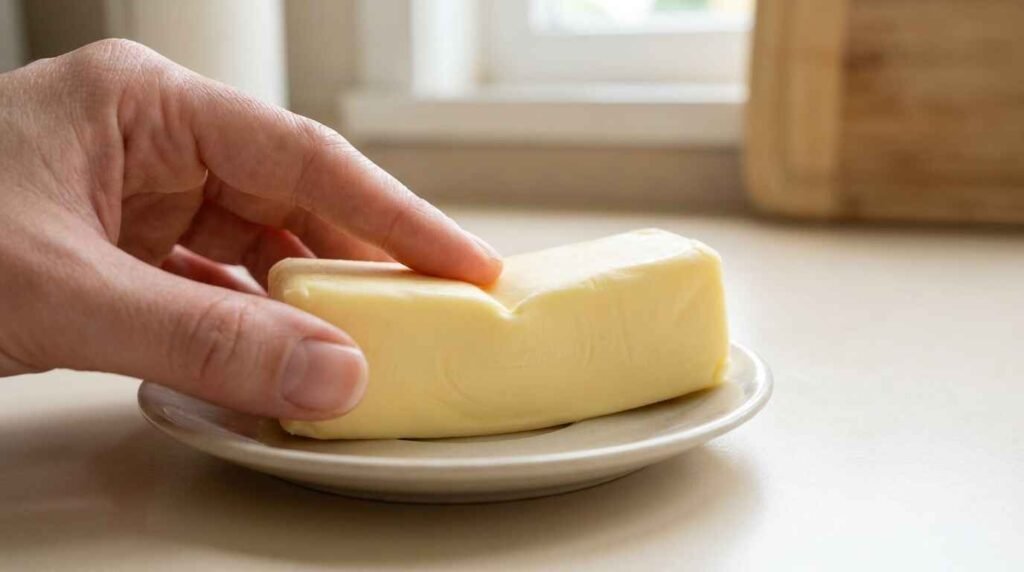
This is the part that actually matters, so here’s the specific test I use now instead of guessing.
Properly softened butter should be around 65-67°F. If you press your finger into it, it should leave an indent, but the butter shouldn’t feel greasy, shiny, or look like it’s starting to separate. It should still hold its shape as a stick, you should be able to pick it up without it sagging or bending.
A simpler test if you don’t want to pull out a thermometer: bend the stick of butter slightly. If it bends without cracking but also without flopping over limply, that’s the zone you want. If it’s still stiff and cracks when you bend it, it’s too cold. If it bends like a wet noodle or you can see any shine or oiliness on the surface, it’s already too warm.
I now just take my butter out of the fridge about 45 minutes to an hour before I plan to bake, depending on how warm my kitchen is. In summer, sometimes 30 minutes is plenty. In winter, it can take closer to 90 minutes. I stopped relying on a fixed time and started relying on the bend test instead, and my results got way more consistent.
Step-by-Step: How I Bake Cookies Now
1. Take the butter out of the fridge 45-60 minutes before you start. Set a timer if you tend to forget, like I do.
2. Do the bend test before you start creaming. It should bend without cracking, with no visible shine or greasiness. If it’s not there yet, wait another 10-15 minutes.
3. Cream the butter and sugar for a full 2-3 minutes, not 30 seconds. Use a stand mixer or hand mixer on medium speed. You’re looking for the mixture to turn noticeably lighter in color and fluffier in texture, this is where those air pockets actually form.
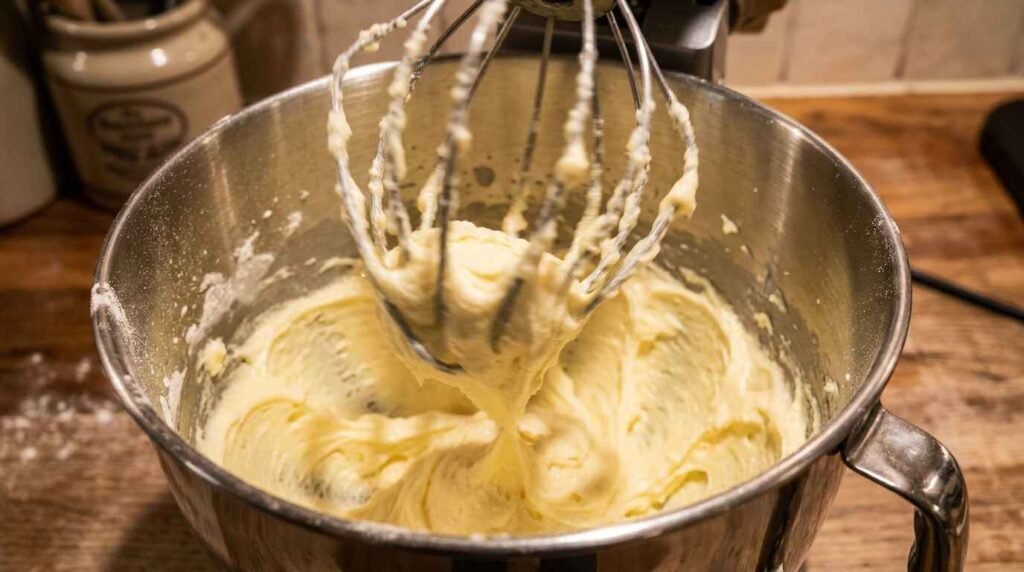
4. Add eggs one at a time, mixing for about 20-30 seconds after each. Don’t dump them in all at once.
5. Mix in dry ingredients on low speed just until combined, about 30-45 seconds. Overmixing here can also cause spreading issues, so stop as soon as you don’t see streaks of flour.
6. Chill the dough for at least 30 minutes, ideally 1 hour. Even with correctly softened butter, a short chill helps solidify things a bit more before baking, which gives you a slightly thicker cookie.
7. Bake at 375°F for 9-11 minutes, pulling them out when the edges are just barely golden and the centers still look a little underdone. They’ll finish setting up as they cool on the pan for the first 5 minutes.
Real Comparison: Same Recipe, Different Butter Temp
I actually tested this side by side once I figured it out, using the exact same recipe, same oven, same day. One batch with butter at around 72°F (too warm, slightly shiny) and one batch with butter at 66°F (bend test, no shine).
The 72°F batch spread noticeably, thin, greasy-looking, crispy throughout. The 66°F batch held its shape, stayed thick, and had that soft, chewy center. Same exact dough recipe. The only variable was butter temperature. That side-by-side test was what finally convinced me this wasn’t a fluke.
Common Mistakes to Avoid
Microwaving butter to “speed up” softening. Even 10-15 seconds can partially melt the outside while the inside is still cold, giving you an uneven texture that’s technically soft in some spots and hard in others. It messes up the creaming process either way.
Leaving butter out too long, especially in a warm kitchen. An hour in a cool kitchen is very different from an hour in a kitchen that’s 78°F because the oven’s been on all afternoon. Judge by texture, not just time.
Adding extra flour to compensate for spreading without addressing butter temp first. This was my mistake early on. It masks the problem instead of fixing it, and changes the texture in ways you probably don’t want.
Skipping the chill step because you’re impatient. I get it, but even 20-30 minutes in the fridge makes a real difference once your butter temperature is already correct.
Not preheating the oven fully before baking. An oven that’s still climbing to temperature when you put the tray in can cause uneven spreading too, so give it the full preheat time, not just until the light turns off.
Final Thoughts
I spent way longer than I want to admit blaming my flour, my baking sheets, my oven, basically everything except the one ingredient that was actually causing the problem. Butter temperature is one of those small details that recipes gloss over with a single vague word, “softened,” and it turns out that word was doing a lot more work than I gave it credit for.
If your cookies are coming out thin, greasy, and spread out no matter what recipe you use, it’s worth checking your butter before you change anything else. It was the fix that actually worked for me, and it didn’t cost anything or require buying new equipment, just paying attention to something I’d been rushing through without thinking about it.