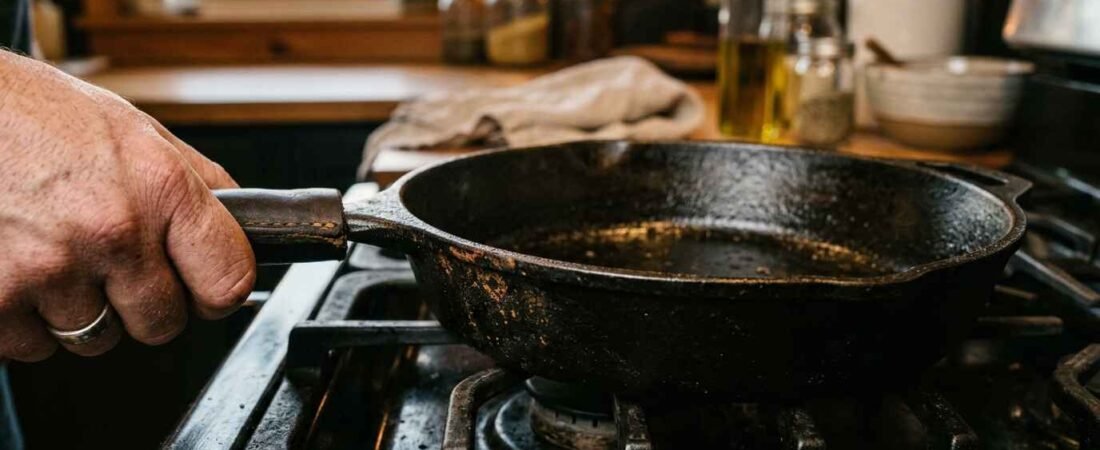
Orange dust. That’s what showed up on my dish towel the third time I wiped down my cast iron skillet after it had been sitting untouched for less than two weeks. Not a full layer of rust, nothing dramatic, just this faint reddish-brown residue that had no business being there on a pan I’d “properly seasoned” a month earlier.
I’d done everything the internet told me to do. Oiled it after every use. Let it dry. Stored it in the cabinet with the other pans. And yet, every couple of weeks, that same orange dust kept showing up, like the pan was quietly rusting from the inside no matter what I did on the outside.
The Rust That Wouldn’t Stay Gone
Here’s what made this specifically frustrating, and probably why you’re reading this if you’re dealing with the same thing: it wasn’t that I’d never seasoned the pan. I had. Multiple times. Each time, it would look great for a week or two — dark, matte, that slightly slick non-stick surface everyone talks about. Then the rust would creep back in, usually starting at the edges near the handle or in small speckled patches near the pour spout.
If your cast iron only rusted once, right after you bought it, that’s a totally different and much easier problem to solve. Mine kept coming back after seasoning, which meant something in my actual routine was working against me, not just a one-time mistake I could fix and move past.
What My “Proper” Seasoning Routine Actually Looked Like
I want to walk through exactly what I was doing, because on paper, it sounded fine.
After cooking, I’d wash the pan with hot water and a scrub brush, sometimes with a small amount of dish soap if there was stuck-on food, since I’d read that modern dish soap isn’t as harsh as the old-school stuff that used to strip seasoning. I’d dry it with a towel, put it back on the stove for a minute or two on low heat to make sure it was dry, then rub a thin layer of vegetable oil into it with a paper towel. Then I’d put it away in the cabinet, usually stacked with a lid loosely on top to keep dust out.
That routine felt reasonable. It’s close to what a lot of basic care guides tell you to do. But three separate things in there were quietly working against me, and I only figured that out by paying closer attention over several months.
Chasing Down What Was Actually Causing It
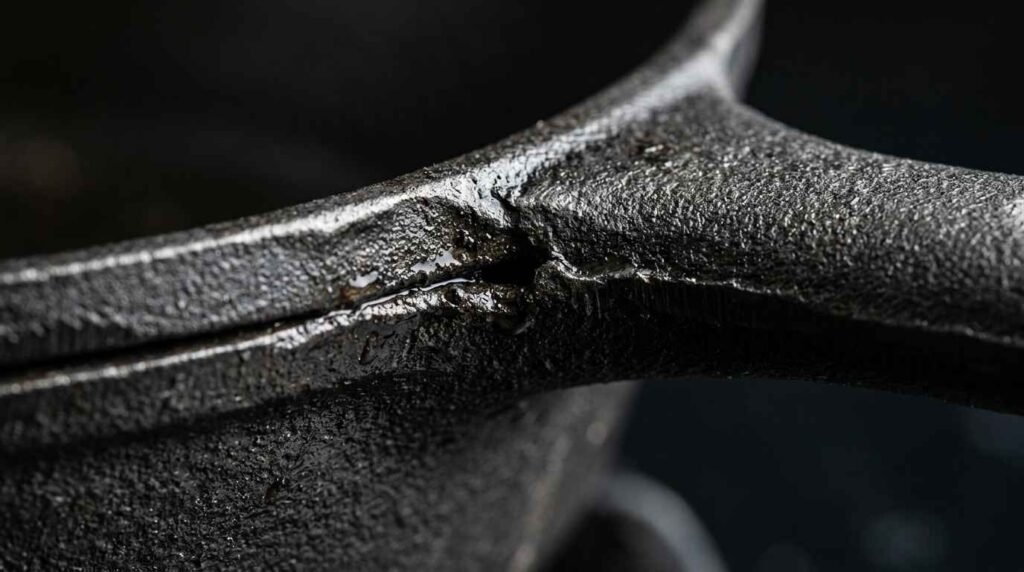
The soap wasn’t really the problem, but the water was staying somewhere I couldn’t see.
I initially blamed the dish soap, since that’s the go-to villain in every cast iron forum thread. I stopped using soap entirely for a few weeks. The rust still came back. That’s when I realized the soap was a red herring in my specific case — the real issue was that water was pooling in the small crevice where the handle meets the pan, a spot I genuinely never dried thoroughly because I couldn’t easily see into it. That hidden moisture sat there long after the rest of the pan looked bone dry.
Stove-drying for “a minute or two” wasn’t actually long enough.
I thought putting the pan on low heat for a minute was sufficient to evaporate any leftover moisture. It wasn’t, especially not for that handle joint. Cast iron holds heat unevenly when it’s still slightly damp, and a quick minute on the burner was really only drying the surface I could see, not the parts tucked into that joint or along the underside near the rim.
Storing it with a lid on top was trapping the exact moisture I thought I’d gotten rid of.
This was the one that genuinely surprised me. I’d been stacking a lid loosely over the pan in the cabinet, thinking it was protecting the surface from dust. Instead, it was trapping whatever tiny amount of residual humidity was left in the pan, with nowhere for it to escape. Cast iron in an enclosed, humid microclimate for days at a time is basically a rust incubator, even if the pan felt completely dry when you put it away.
The Pan I Actually Ruined Along the Way
I have to admit this part, because it’s the mistake that taught me the most, even though it cost me a pan.
At one point, frustrated with the recurring rust, I decided to strip the entire pan down and start over using a method I’d seen online: a self-cleaning oven cycle to burn off all the old seasoning and any rust, followed by a full reseason from scratch. I did this without checking my specific oven model’s self-clean temperature range first.
My oven’s self-clean cycle ran hotter and longer than I expected, and by the time it finished, the pan had warped slightly — just enough that it no longer sat flat on my glass-top stove, rocking slightly when I tried to use it. I’d essentially cooked the metal itself past a temperature it could handle without deforming. That pan still exists, relegated to campfire cooking duty where a slightly uneven bottom doesn’t matter as much, but it’s no longer my everyday skillet.
The lesson wasn’t “never strip a pan.” It was: know your oven’s actual self-clean temperature before you use it on cast iron, and if you’re unsure, a stovetop or grill-based strip-and-reseason is a safer bet than trusting a self-clean cycle you haven’t researched for your specific appliance.
What Actually Stopped the Rust For Good
Once I identified the three real culprits, hidden moisture at the handle joint, insufficient drying time, and lidded storage, the fix wasn’t complicated. It just required being more deliberate about a few specific moments in the process.
My routine now looks like this:
- Wash immediately after cooking, while the pan is still warm, using hot water and a stiff brush. I still use a small drop of soap occasionally and it has never caused a problem, that myth about soap ruining seasoning turned out to be overstated for well-seasoned pans, at least in my experience.
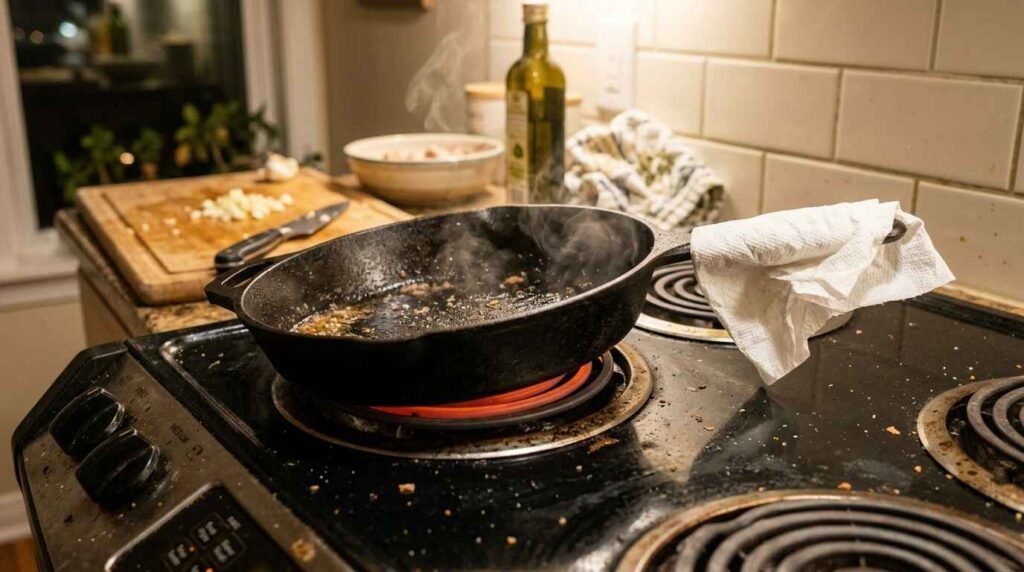
- Dry it on the stove over medium heat for a full 4-5 minutes, not just a quick minute, specifically tilting the pan so I can see water fully evaporate from the handle joint area, not just the cooking surface.
- Apply a very thin layer of oil while the pan is still warm, using a paper towel and working it into every surface, including the underside and that handle joint I used to ignore.
- Let it sit uncovered on the stove for another 10-15 minutes before putting it away, giving any last bit of moisture time to fully leave rather than sealing it in immediately.
- Store it uncovered, or with a paper towel between it and anything stacked on top, instead of a solid lid. The paper towel absorbs any residual moisture and still keeps dust off without trapping humidity the way a lid does.
That handle-joint detail alone solved probably 80% of my recurring rust. The uncovered storage handled the rest.
A Couple of Tools That Made This Easier
I picked up a set of chainmail scrubbers specifically for cast iron, which made cleaning stuck-on food faster without needing to scrub so hard that I worried about damaging the seasoning. I also started keeping a small bottle of flaxseed oilspecifically for reseasoning, since a few cast iron forums swear by it for building a harder, more durable seasoning layer compared to vegetable oil, though honestly the difference for my day-to-day cooking has been pretty subtle.
If you’re building out a kitchen that leans more toward quick, low-effort cooking overall, this pan has actually become my go-to for the 15-minute garlic butter pasta I make constantly, since a well-seasoned skillet toasts garlic more evenly than my nonstick pans ever did.
Two Years Without a Single Orange Speck
It’s been about two years since I changed that routine, and the rust just hasn’t come back. Not a speck, not even in that handle joint that used to be my problem spot every single time.
What got me was never really about seasoning technique in the broad sense, it was about a few very specific, easy-to-miss moments in the process where moisture was quietly winning. If your rust keeps returning after you’ve already reseasoned properly, it’s worth checking those same three spots before you assume you need to start the whole process over from scratch.