The 20th time I tossed a bunch of sad, slimy, yellowed cilantro which I had bought, just for kicks, for about $3 and maybe had for 72 hours. I did the math. I’d tossed away about $300 worth of herbs in the last year without ever getting beyond day 3.
I cook a ton. Most of what I cook has fresh herbs in it. And for years I basically just assumed herbs were a transient ingredient – you buy ’em when you need ’em and use ’em right away, because I was never able to keep them alive in the fridge more than a couple days.
It turns out, the problem wasn’t the herbs… it was the way I stored them.
The Crisper Drawer Graveyard
Here’s how I used to do it: Buy herbs at the store, still attached to their plastic clamshell or shipped in a flimsy produce bag, and then toss them into the bottom drawer of the fridge, where I’d promptly forget about them for a few days. When I’d open the drawer again, I’d be greeted by a lot more compost than food, black basil, slimy translucent cilantro, and a heavily browning, slightly shriveling bunch of parsley.
I thought this was just the way herbs worked. Quick to receive, quick to evaporate, buy in small amounts. I didn’t realize I had been doing it wrong all these years until a friend of mine showed me her fridge, with a jar of parsley standing in water that looked no more worse for the wear than the day she purchased it a week and a half ago.
Testing Every Method I’d Heard Of
After I got intrigued, I tested a real comparison: I bought, on the same day, two bunches each of parsley, cilantro, and basil and kept them four different ways to figure out what would really last.
Old Method: Left in original plastic clamshell, straight into the crisper drawer. My old standby and control for the test. Parsley remained in original state with about 4 days of noticeable wilting.
Cilantro got slimy on day 3. Basil was covered with dark bruised spots by day 2. That’s about the length I had been experiencing.
Trimmed and arranged upright in a jar of water; jar left uncovered on counter. It worked wonderfully for basil in particular, staying fresh and green for an entire 6 days without any refrigeration needed. It was not helpful for parsley or cilantro, both of which quickly wilted in just 2 days on the countertop, desperately longing for the fridge which they hate.
Trimmed and stored upright in a jar of water, loosely covered with a produce bag, and stored in the fridge. This is the method that finally won for parsley and cilantro! Parsley held onto its crispness and bright color for 12 days. Cilantro reached 9 days before I finally noticed any significant wilting, which was a real shock compared to the 3 days I had been getting.
Encased in a humid paper towel and into a sealable container in the fridge. Still nearly as good at 10 days for parsley and 8 days for cilantro, a little behind the water jar method, but handy when you don’t want a jar of water taking up room in the fridge or if the herbs have floppy stems, like dill.
The Combination That Actually Works
Here’s what I do now based on that test, and it takes hardly any more effort than what I was doing wrong before.
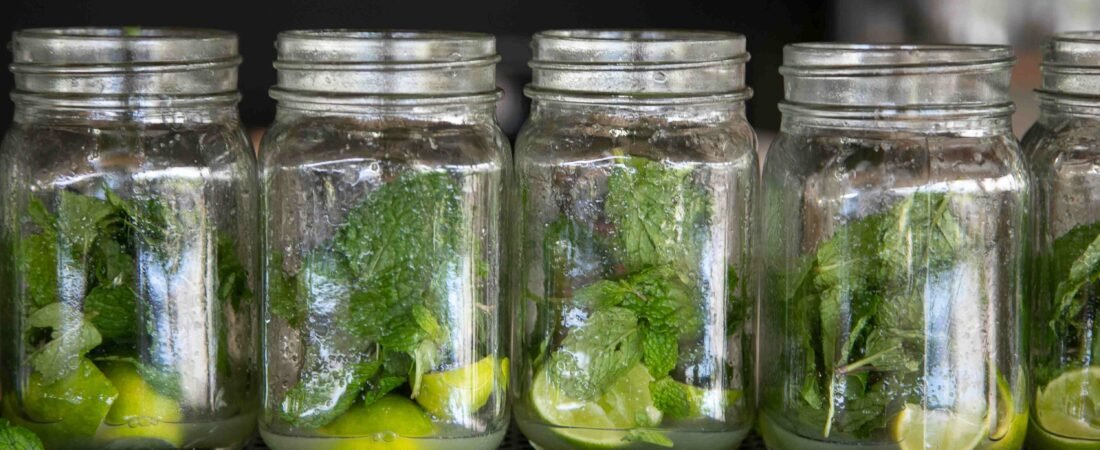
As soon as I walk in the door, I snap off about a half inch of the ends at an angle, just like you would do for flower arrangements. I store in a jar filled with roughly an inch of water (literally enough to cover the cut ends) and place the bunch of herbs in the jar until I need them. If I plan on keeping them in the refrigerator, I loosely slip a produce bag over the top of the leaves (not sealed tight, just draped loosely on top of the leaves to retain some moisture) and leave that whole jar on a shelf in the door or on a shelf with just a little bit of room to stand upright.
I change the water 2 to 3 times a week, which takes about ten seconds and was far more effective than I expected the first time I tested it.
For a more science-based reason as to why this works (what herbs can I put in the fridge and which herbs can’t I?) check out this breakdown from Michigan State University Extension on how to store fresh herbs.
One Herb That Breaks All The Rules
Basil is in a class of its own when it comes to this stuff – it took me killing off a few bunches before I came around. Basil hates cold. The leaves begin to blemish and blacken after just a day or two when placed in the fridge – I used to blame this on rough store handling, until I finally understood it was the fridge all along.
Basil is exactly how my friend’s jar was, standing in water, up in the water, on the counter at room temperature, far away from the fridge. When you care for it that way, it actually lasts nearly a week, and can even sprout tiny roots if you let it sit for long enough-which is a handy thing to have in your pocket should you choose to plant.
Here’s a Mistake That Cost Me a Whole Bunch of Cilantro
I must be frank about one experiment that went awry-perhaps I got a little overly optimistic with the water jar strategy early in the game. Since a little water seemed to do the trick, I thought that entirely immersing the leaves (stems and all) couldn’t hurt.
It had exactly the opposite effect. Leaves beginning to rot just below the surface, turning limp and a touch slimy where they met the water, while the rest of the bunch remained fresh. A lot of that bunch of cilantro didn’t make it back to my house intact for that reason: in the future, the stems only. Just as you wouldn’t dunk a whole bouquet of flowers in the vase if you think a little water might be good for the stems.
A Related Habit Worth Pairing This With
For those of you who always seem to have leftover herbs after you cook something-the odd little handfuls not quite worth setting up a new jar for-it’s worth pairing chopping herbs in a little olive oil in an ice cube tray with the above technique, and doing both together rather than instead of. This works particularly well with the kind of empty-fridge meals I wrote about in the 10-minute egg fried rice I make when there’s nothing left, because you just can toss a frozen herb cube into the pan to cook alongside your rice without need to buy fresh.
Two Questions I’m Asked About This All the Time
Not quite the same. Woody herbs are far less juicy and are happy to be wrapped in a mildly moist paper towel in a bag or container that’s mostly sealed, and will last just fine without the water jar arrangement altogether. I managed to keep rosemary going for almost three weeks that way, because it was never a fast-wilting sort to start with.
It has been perfectly fine in my tests. I haven’t seen a difference with filtered water and I wouldn’t go out of your way to try to get some special water here. How often you change the water is much more important than the water source.
What’s Different In My Fridge Now
My crisper drawer used to be a place where herbs went to die, a week after they came home with me. Now it’s a line of jars, parsley and cilantro and mint and whatever else I have that week, standing proud and proud, unchanged from the day they came home, well past the threshold where I knew I would both begin to resent myself for wasting them, and to start throwing them away. The basil lives on the counter now, far away from that system, on which I was embarrassingly slow to learn.
If you can’t seem to keep your store-bought herbs alive for more than a handful of days, you might want to compare them to whatever it is you’re doing, because for me the difference between the two approaches wasn’t all that subtle.