It’s 2:47 am, I’m on my second twelve-hour shift in a row, and I’m standing in the break room staring into a vending machine trying to decide between stale pretzels and a granola bar that’s probably older than my car. That was me, most nights, for the first four months of working nights.
I’m not going to pretend I figured this out immediately. I worked overnight shifts in a hospital lab for a little over three years, and for the first stretch of that, my “meal prep” was whatever I grabbed off the shelf at a gas station on my way in. I gained about twelve pounds, felt like garbage most days, and genuinely thought that was just the tradeoff you make for working nights.
It’s not. But the meal prep advice that works for a normal 9-to-5 person doesn’t translate to night shift life at all, and that’s the part nobody tells you.
Why Regular Meal Prep Advice Doesn’t Work for Night Shift
Most meal prep content assumes you eat breakfast in the morning, lunch around noon, and dinner in the evening. Your body on night shift doesn’t care about any of that.
My actual eating schedule during a shift looked like this: a real meal around 7 pm before I left the house, a snack around 11 pm, a bigger meal around 2-3 am, and then something light around 6 am right before I drove home to sleep. That’s a completely different rhythm, and it means the “prep chicken and rice for lunch” advice just doesn’t map onto my day at all.
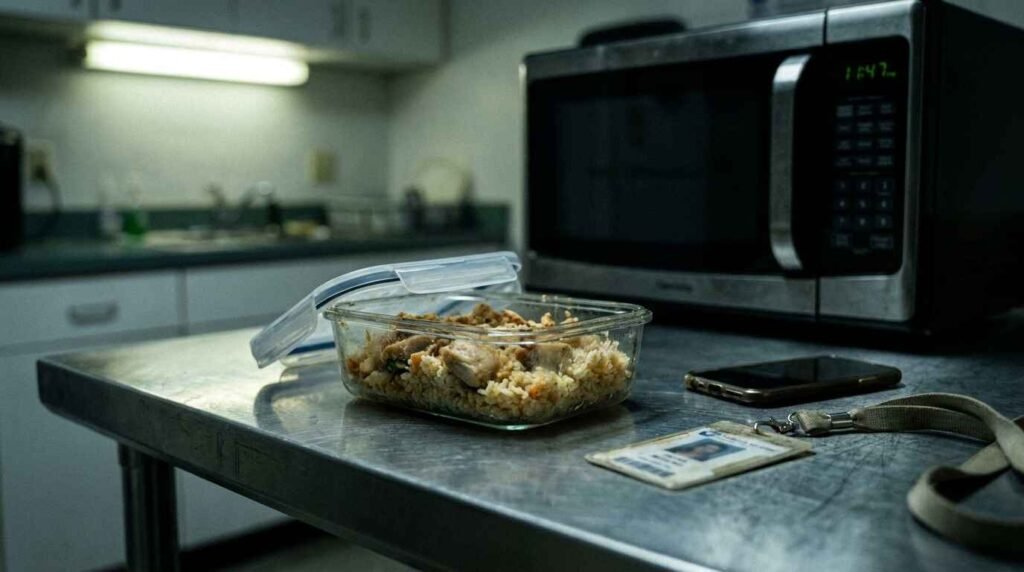
The other thing nobody accounts for is the break room itself. My hospital’s break room had a microwave that maybe eight other people were also trying to use during the same 20-minute window, a fridge that was always packed to the point where containers got knocked over, and lighting that made everything look slightly sad at 3 am. Whatever I brought had to survive that environment, not a nice office kitchen.
What Actually Reheats Well (and What Turns to Mush)
This took me embarrassingly long to figure out through trial and error, so let me save you the time.
Reheats well:
- Rice-based dishes (fried rice, grain bowls) — rice actually holds up better the next day
- Roasted vegetables like broccoli, carrots, and Brussels sprouts, as long as you don’t overcook them the first time
- Chili, soups, and stews — these are basically built for reheating
- Shredded chicken or ground turkey in a sauce
- Baked sweet potatoes, either whole or cubed
Turns to mush or gets weird:
- Pasta with cream sauce — it separates and gets grainy, I learned this the hard way three separate times before I stopped trying
- Anything breaded or fried — soggy within a day, no way around it
- Salads with dressing already on them — obviously, but I still tried it once out of laziness
- Eggs, specifically scrambled ones reheated in a microwave — they turn rubbery and honestly a little sulfurous smelling, which is not what you want to smell like at 3 am in a shared break room
My One Day Off: How I Actually Prep
I worked a 7-on, 7-off schedule for most of that job, so my prep day was always the Sunday before my stretch of nights started. Here’s what that day actually looked like, start to finish.
1. Grocery shop first, before anything else (about 45 minutes). I kept a running list on my phone using the Notes app all week, adding things the second I ran out — that habit alone cut my shopping time in half because I wasn’t wandering the store trying to remember what I needed.
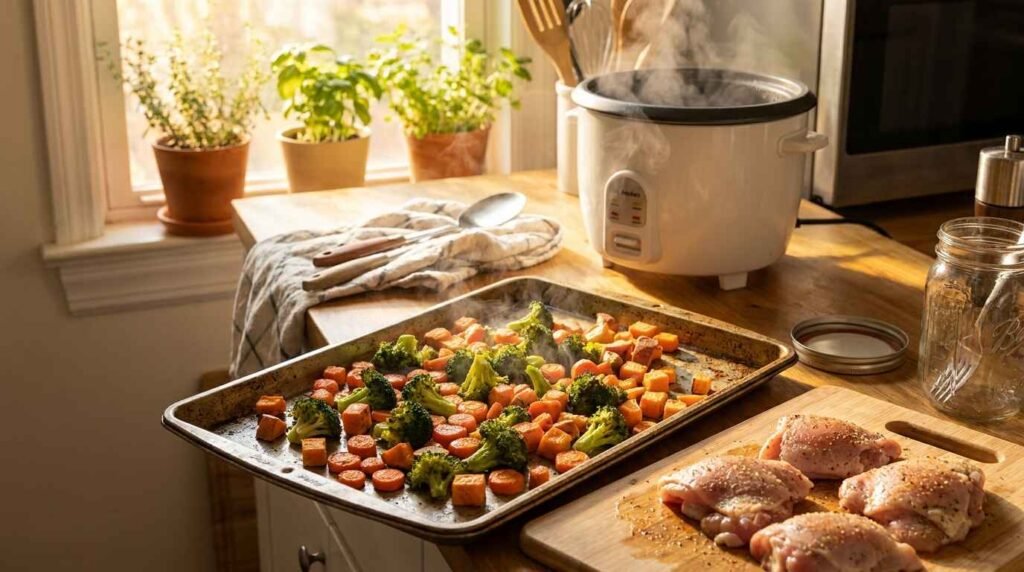
2. Cook your proteins first, in bulk (about 60-75 minutes). I’d usually do two proteins per week — something like 3 lbs of shredded chicken thighs in the Instant Pot (cook on high pressure for 15 minutes, natural release for 10) and a batch of ground turkey browned in a pan with taco seasoning. Doing two different proteins meant I wasn’t eating the exact same flavor profile five nights in a row, which matters more than people think when you’re already tired and miserable.
3. Roast your vegetables while the protein cooks (35-40 minutes). Broccoli, carrots, and cubed sweet potato, tossed in olive oil, salt, and pepper, roasted at 425°F. I’d do two full sheet pans at once so the oven wasn’t running twice.
4. Cook a grain in bulk (20-25 minutes). Usually rice or quinoa, made in a rice cooker while everything else was happening on the stove and in the oven. This is the part that made the whole system work — having a base ready meant assembly took two minutes per container instead of cooking from scratch each night.
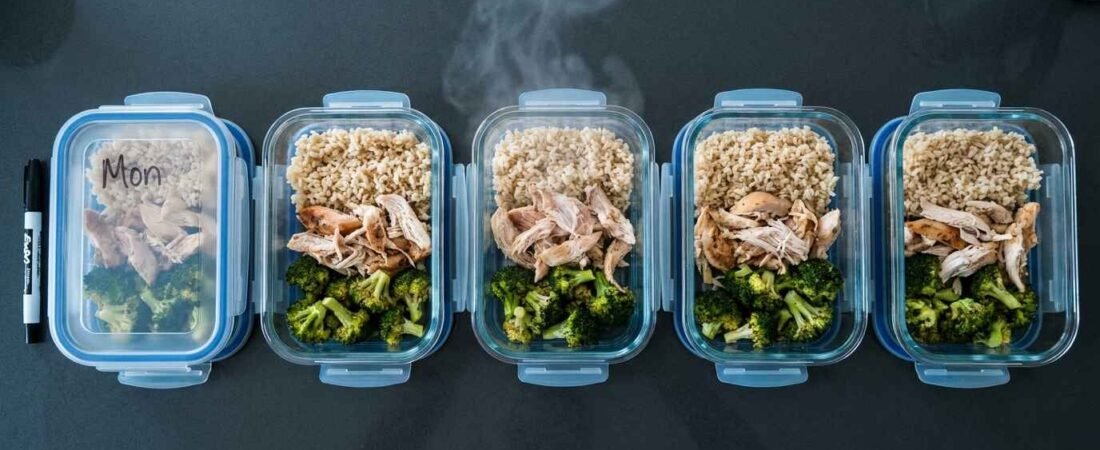
5. Portion everything into containers immediately while it’s all still warm-ish, not hot. I used Pyrex glass containers with locking lids, and this actually matters — plastic containers stained orange from the turkey taco seasoning within a month and started smelling faintly like whatever I’d stored last, even after washing. Glass didn’t do that, and it also reheated more evenly in the microwave without the edges getting weirdly hot while the middle stayed cold.
6. Label containers with the day, not just contents. Sunday, Monday, Tuesday, written with a dry erase marker directly on the lid. This sounds excessive until you’re exhausted at 1 am and can’t remember if the chicken bowl in the back has been in there for two days or five.
7. Freeze what you won’t eat in the first 4 days. Anything I wasn’t going to get to within four days went straight into the freezer instead of the fridge. Cooked chicken and rice bowls freeze fine for about a month; roasted vegetables get a little softer after freezing but are still edible, just not as crisp.
A Realistic Weekly Setup
Here’s roughly what a prepped week actually looked like in my fridge:
- 5 containers of chicken, rice, and roasted broccoli (my “safe” meal for the 2-3 am slot)
- 3 containers of turkey taco bowls with rice, black beans, and roasted peppers
- A big batch of overnight oats in mason jars for the drive-home breakfast, made with rolled oats, milk, chia seeds, and frozen berries — no cooking required, just mix and refrigerate
- A bag of hard-boiled eggs, peeled, for quick protein snacks around 11 pm
- Cut up veggies and hummus for the 6 am wind-down snack when I didn’t want anything heavy
If you’re also into quick weeknight cooking on your days off, I’ve got a 15-minute garlic butter pasta recipe that’s become my go-to for the actual dinner I eat before I leave for a shift, it’s fast enough that I’m not standing over the stove when I’d rather be sleeping in before work.
The Week My Whole System Fell Apart
I want to be honest about this because most meal prep posts make it sound like once you find a system, it just works forever. It doesn’t.
About two months into doing this consistently, I had a week where I prepped everything on Sunday like normal, but then picked up two extra shifts because a coworker was out sick. By Wednesday I’d eaten through everything I’d planned for the whole week, and Thursday and Friday I was right back to vending machine granola bars because I hadn’t built in any buffer.
Now I always prep one or two extra containers beyond what I think I’ll need, specifically for weeks like that. It’s a small thing, but it’s the difference between the system surviving a curveball and completely collapsing the second your schedule shifts.
Common Mistakes to Avoid
Prepping food that only tastes good fresh. If a dish’s whole appeal is that it’s crispy or fresh, it’s not a night shift meal. Save it for a day off.
Using containers that don’t seal properly. A leaking container in your bag, combined with exhaustion and driving home at 7 am, is a genuinely miserable combination. Spend the money on ones with actual locking lids.
Not accounting for a shared, chaotic break room fridge. Stuff gets moved, knocked over, sometimes taken by mistake. I started keeping a small soft cooler bag at my station instead of relying on the communal fridge for everything, and it cut down on lost meals significantly.
Skipping the snack tiers. Only planning “meals” and not accounting for the 11 pm and 6 am in-between moments is how you end up at the vending machine anyway.
Not freezing a backup buffer. See above. Life happens, shifts get picked up, plans change. Build in slack.
Final Thoughts
Working nights already messes with your body enough the sleep, the sunlight, the way your friends’ schedules never line up with yours. Food is one of the only pieces of that whole equation you actually have control over, and it’s worth treating it that way instead of defaulting to whatever’s easiest at 3 am.
It took me way longer than it should have to build a system that actually worked for my specific schedule, but once I did, the difference wasn’t just physical. I stopped dreading the 2 am meal break, and that’s a bigger deal than it sounds like when you’re three shifts deep into a stretch of nights.