A pan of blondies that were supposed to bake for 25 minutes came out with edges like jerky at the 22 minute mark. That was the bake that finally made me stop blaming myself and start blaming my oven.
A Pattern I Kept Explaining Away
For close to a year, I had a running list of bakes that “just didn’t work out,” and I chalked every single one up to something else. Cookies that browned too fast on the bottom. A banana bread that was done in the middle but had a top that looked almost burnt by the time a toothpick came out clean. A batch of scones that went from pale to overly dark in what felt like a five minute window I somehow always missed.
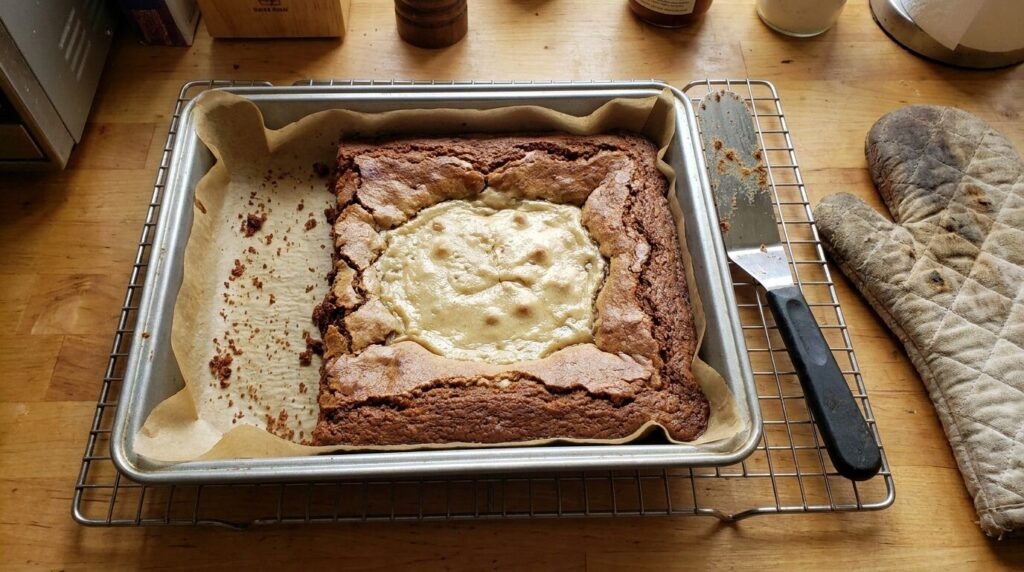
Each time, I told myself a different story. Maybe my baking sheet was too thin. Maybe I opened the oven door too often or maybe I just needed a better recipe. I adjusted pans, moved racks, tried parchment instead of a silicone mat, and nothing fully fixed it. The bakes kept coming out faster and hotter than the recipe timing suggested they should, and I genuinely didn’t connect it to the oven itself until that blondie pan.
The $13 Tool That Ended the Guessing
After the blondies, I finally bought an oven thermometer, a simple analog one from the baking aisle, the kind that just hangs on the middle rack. I’d avoided doing this for longer than I want to admit, partly because I assumed my oven’s built in digital display was accurate. It wasn’t.
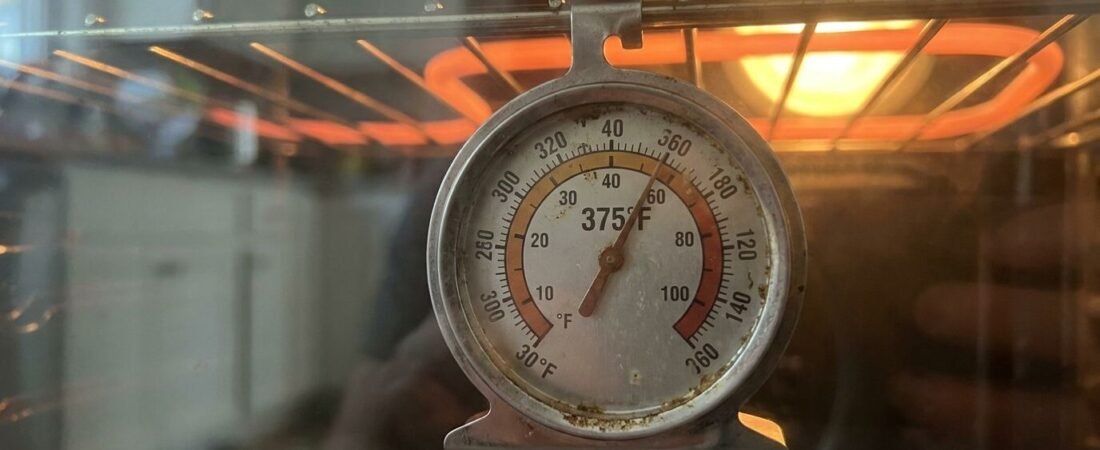
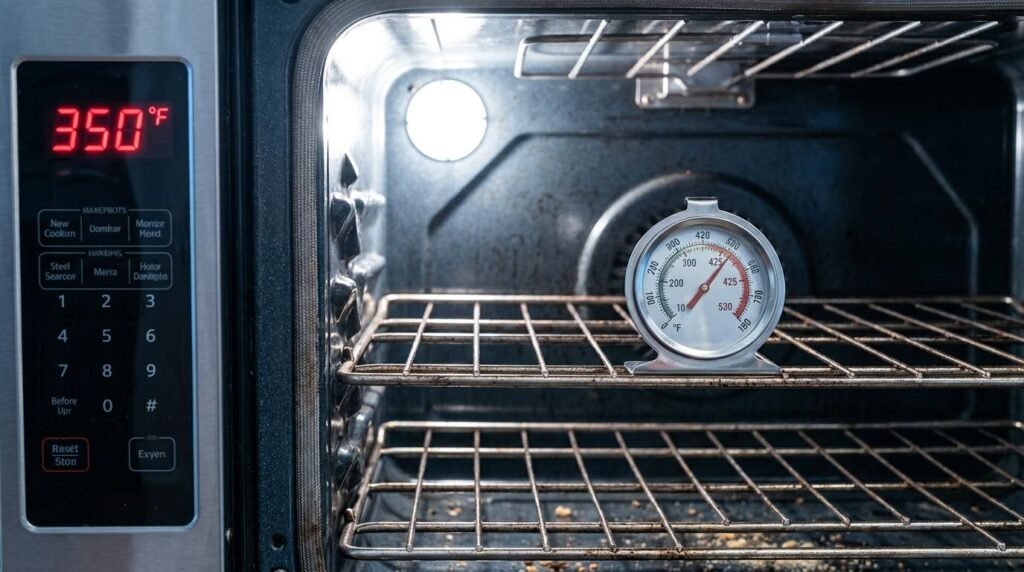
I set the oven to 350°F, let it preheat fully for 20 minutes, and checked the thermometer. It read 375°F. I assumed it was a fluke, let the oven run for another 15 minutes, and checked again. Still 375°F. My oven had been running 25 degrees hot this whole time, and every single recipe I’d ever baked in it had been cooking in an environment hotter than what the recipe writer actually tested it in.
If you want a more detailed explanation of the actual calibration process, this breakdown on oven calibration walks through checking for hot spots and adjusting the dial itself, which is worth a read if you want to go a step further than just knowing your offset.
What 25 Degrees Actually Does To A Bake
Twenty five degrees sounds small, and on paper it is, but the effect on a bake is bigger than the number suggests. A hotter oven sets the outside of whatever you’re baking faster than the inside has a chance to finish. That’s exactly what was happening with my banana bread, a dark, set exterior with a center that hadn’t quite caught up yet. It’s also why my cookies were browning at the edges before the centers had spread and set properly, giving me that slightly domed, underbaked-in-the-middle texture I kept blaming on the recipe.
Scones and anything with a high butter content are especially sensitive to this kind of drift, because the extra heat causes the butter to melt and spread faster than it should, which changes both the texture and how quickly the surface browns. Cakes are a little more forgiving, but even there, a hot oven tends to produce a slightly domed, sometimes cracked top instead of a flat, even one.
How I Actually Check My Oven Now
This part doesn’t need to be complicated, and once you’ve done it once, it takes about 20 minutes total.
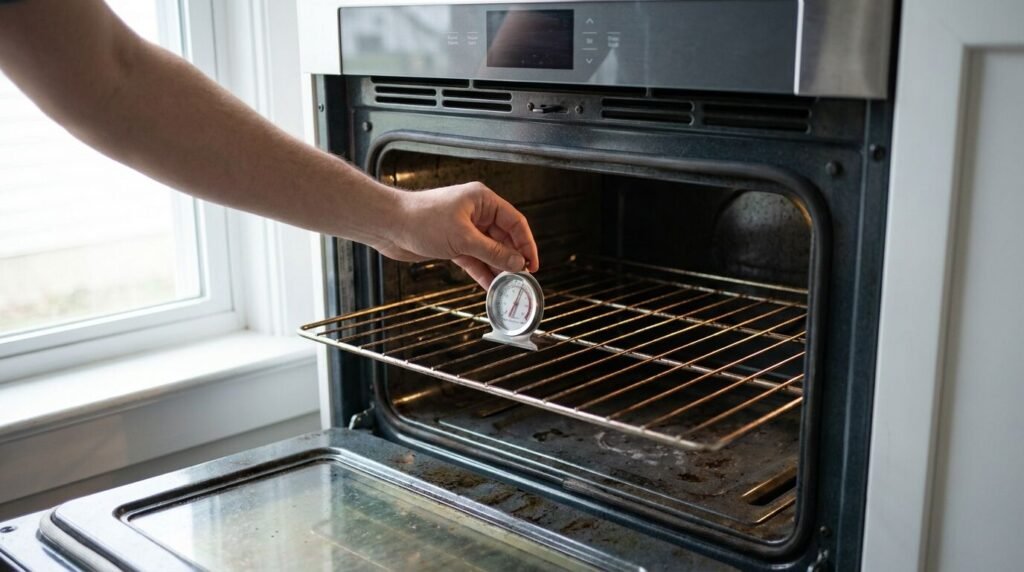
Set the oven to a normal baking temperature, something like 350°F, and place an oven thermometer on the middle rack before you turn the oven on. Let it preheat completely, using the oven’s own indicator that it’s ready, then wait an additional 10 minutes before checking the thermometer, since many ovens hit their set point and then drift slightly as they stabilize. Check the thermometer reading against the temperature you set. If there’s a gap of more than about 10 to 15 degrees, that’s not just normal fluctuation, that’s a real offset worth accounting for every time you bake.
I now check mine every few months, since ovens can drift further over time, especially older ones or ones that get used constantly. It’s a five minute check that’s saved me more failed bakes than any new pan or ingredient swap ever did.
Adjusting Without Replacing The Oven
Once you know your number, the fix is honestly just subtraction. My oven runs 25°F hot, so if a recipe calls for 350°F, I set mine to 325°F and let the thermometer confirm it’s actually landing close to 350°F inside. It’s a small mental step that becomes automatic after a week or two of doing it.
For anything particularly sensitive to timing, cookies especially, I also started checking a minute or two earlier than the recipe suggests, just in case that specific batch runs a little fast even with the adjusted temperature. It’s not a perfect science, but between the temperature offset and a slightly earlier check, my bakes have been consistent in a way they weren’t for that entire frustrating year.
Getting an oven professionally recalibrated is technically an option too, and if your oven is under warranty or newer, it might be worth a service call. Mine is older and I decided the manual adjustment was a fine enough workaround that a repair visit wasn’t necessary, but that’s a call worth making based on your specific oven and situation.
One Bake I Still Get Wrong Sometimes
I want to be honest that this fix isn’t flawless. Even knowing my oven’s offset, I still occasionally overbake something, usually when I’m distracted and don’t set a timer for the earlier check I know I should be doing. A batch of macarons a few months back came out with slightly cracked tops because I trusted the adjusted temperature completely and skipped my usual early peek. Macarons in particular seem to have almost no room for error, offset accounted for or not, and that’s a bake I still approach a little nervously every time.
A Related Habit Worth Building
If you bake regularly enough that oven temperature matters this much to you, it’s worth pairing this with paying closer attention to ingredient temperature too, since that’s another variable people underestimate. I wrote about how getting my butter temperature wrong was quietly causing my cookies to spread flat every single time, which turned out to be a completely separate issue from the oven itself, but the two problems together explained almost every bad batch I’d made in a two year stretch. Once I fixed both, my success rate went up more than either fix alone would have predicted. You can also read Why My Cookies Spread Flat Every Time (It Was My Butter Temperature).
Every Bake Since
It’s been a little over a year since I bought that thermometer, and I think about that blondie pan every time I preheat the oven now. The fix cost thirteen dollars and took less time than the bake itself, which makes the year of blaming pans, recipes, and my own technique feel a little silly in hindsight.
If your bakes are consistently coming out faster, darker, or drier than a recipe suggests they should, it’s worth checking your actual oven temperature before you change anything else. It’s the kind of problem that’s invisible until you measure it, and completely obvious once you do.